
Nearly through the first trimester—without a compulsory glow
12 Weeks Pregnant: Symptoms, Scan and Baby Development
Quick answer: at 12 weeks pregnant, the NHS says the foetus is about 5.4cm from head to bottom—roughly plum-sized. Nausea and tiredness may begin to ease, but they do not have to. In England, the dating scan is normally offered around 10 to 14 weeks; it checks dates, the number of babies, where the pregnancy is growing and aspects of development.
Twelve weeks is often treated like pregnancy’s ceremonial finish line. It is not. It is a useful milestone near the end of the first trimester, and it is often scan time, but bodies do not switch symptoms off at midnight and a scan cannot promise the rest of pregnancy will be uneventful.
What it can do is give clearer dates and useful information. Here is what may be happening now, what the scan and optional screening involve, and what deserves medical advice.
What does 12 weeks pregnant mean?
Pregnancy weeks are counted from the first day of the last menstrual period, so 12 weeks pregnant is usually around ten weeks after conception in a 28-day cycle. Ovulation dates vary, which is why the dating scan may move the estimated due date.
If your dates are still fuzzy, the KidsCo due date calculator gives a planning estimate. Use the scan date supplied by your maternity team when they revise it. The 8 weeks pregnant guide covers the changes leading up to this point.
Baby development at 12 weeks
The NHS week-12 guide describes the foetus as about 5.4cm from head to bottom, around the size of a plum. Internal organs and muscles have grown, the skeleton is made from tissue that is beginning to harden into bone, and cardiac activity can be picked up on an ultrasound scan.
The sex organs have formed, but most scans cannot reliably show the baby’s sex this early—and that is not the purpose of the dating scan. Arms and legs can move, although you are unlikely to feel those movements yet. There is no need to compare your scan picture with somebody else’s: position, dates, machine and image angle all change what a still frame looks like.
The placenta has usually taken over more of the work previously done by the yolk sac. Development is still very much under way, so phrases such as “fully formed” can be misleading. The rest of pregnancy involves enormous growth and continuing maturation.
Your body and symptoms at 12 weeks
Some people begin to feel more human as the first trimester closes; others are still firmly sponsored by crackers. Common symptoms can include:
- nausea, vomiting, tiredness or dizziness
- sore or growing breasts
- bloating, indigestion, constipation or mild cramps
- headaches and mood changes
- a metallic taste, food dislikes or stronger sense of smell
- white milky discharge without soreness or an unpleasant smell
- skin darkening, greasier skin or hair changes
A bump can be obvious, barely there or mostly bloating. Previous pregnancies, body shape, muscle tone, number of babies and ordinary clothing all change what shows. Bump size at twelve weeks is not a home measure of growth.
Pregnancy sickness often improves between weeks 12 and 20, but it can last longer. Ask for help if vomiting is stopping you eating, drinking, peeing normally or functioning. The morning sickness guide explains the usual pattern, while a clinician can offer treatment rather than expecting you to survive on heroic nibbling.

What happens at the 12-week scan?
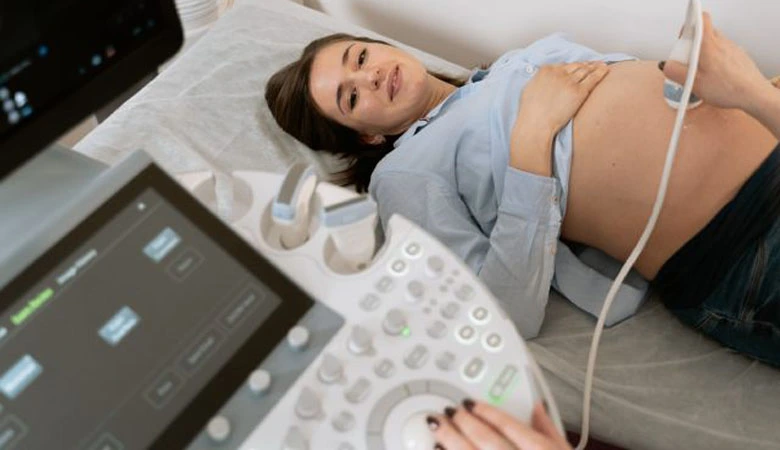
In England, the NHS dating scan is generally offered at around 10 to 14 weeks. It is usually performed by a sonographer in a hospital ultrasound department and often takes about 20 minutes. Your appointment instructions may ask you to arrive with a full bladder because that can make the image clearer.
The scan is used to:
- estimate how many weeks pregnant you are and calculate the due date
- check whether there is more than one baby
- check that the pregnancy is growing in the right place
- look at the baby’s development and identify some conditions
A dating scan is useful, but it cannot detect every condition or guarantee a particular outcome. If the view is unclear because of dates, position or another reason, the team may need more time or another appointment. Ask before the day whether children or extra adults can attend and whether photos are offered; local policies differ.
Our pregnancy scan timeline explains the routine stages, and the early scan guide covers why an earlier result may sometimes be inconclusive.
Is screening done at the dating scan?
If you choose it, the dating scan can be combined with screening for Down’s syndrome, Edwards’ syndrome and Patau’s syndrome. The combined test uses a blood test and an ultrasound measurement of fluid at the back of the baby’s neck. The timing matters: the blood test is used between 10 and 14 weeks and the nuchal-translucency measurement between 11 and 14 weeks.
Screening estimates chance; it does not diagnose a condition. A higher-chance result may lead to an offer of further screening or diagnostic testing, with a healthcare professional explaining the benefits, limits and possible risks. Screening is optional. Choosing it or declining it should not affect the rest of your antenatal care.
If the scan happens after the combined-test window, a different blood test may be offered between 14 and 20 weeks to screen for Down’s syndrome. Ask your maternity team which programme and dates apply where you live, because UK arrangements are not identical everywhere.
Your practical 12-week checklist
Finish the first-trimester folic-acid course
The usual NHS recommendation is 400 micrograms of folic acid daily through the first 12 weeks. Some people are prescribed 5mg because of a condition, medicine or pregnancy history. If you have missed doses or only just learned you are pregnant, start and ask your midwife or GP what applies to you. Follow current advice on a 10-microgram vitamin D supplement too, and avoid supplements containing vitamin A as retinol.
Keep medicines under review
Check prescriptions, painkillers, supplements and herbal products with a pharmacist, midwife, GP or specialist. Never stop a medicine prescribed to keep you well without checking first. The NHS medicines in pregnancy page explains why both taking and stopping treatment need a proper risk discussion.
Eat normally, not for two
A balanced diet is the goal; extra calories are not normally needed this early. Use the current NHS food-avoidance list, wash produce, keep caffeine to no more than 200mg a day and avoid alcohol. If nausea has narrowed your menu, focus on keeping food and fluids down and ask for help rather than chasing a perfect plate.
Move and look after your pelvic floor
For an uncomplicated pregnancy, normal activity is generally encouraged. Build up gently, stay hydrated and stop if you feel unwell. Pelvic-floor exercises can be done during pregnancy; squeeze the muscles around the vagina and back passage while breathing normally, then fully relax. Ask a midwife or pelvic-health physiotherapist if you are unsure, have pain or are leaking urine.
Make space for mental health
A reassuring scan does not automatically remove anxiety, and a difficult scan or previous loss can make this week especially hard. Tell your midwife or GP when worry, low mood, intrusive thoughts or panic are getting in the way. The pregnancy anxiety guide gives plain-English support routes. Call 999 or go to A&E if there is immediate danger of harm.
Do you have to announce at 12 weeks?
No. The familiar “wait until 12 weeks” rule is a social convention, not a medical instruction. Tell people when their support would help, whether that is immediately, after a scan or much later. You can tell one trusted person and keep the news otherwise private.
Work is a separate practical question. You may choose to tell an employer earlier if you need adjustments, time for appointments or a workplace risk assessment. Formal notice for maternity leave is due later, by the end of the 15th week before the week your baby is due; our statutory maternity pay guide has the dates, rates and worked examples.
Bleeding, pain and urgent symptoms
Bleeding at 12 weeks does not automatically mean miscarriage, but it should be assessed. Contact your maternity unit or early pregnancy unit if you have their number, or NHS 111 if you cannot reach an appropriate local service. See the KidsCo guide to bleeding in early pregnancy for a simple route map.
Call 999 if bleeding comes with severe abdominal pain, shoulder pain, faintness, dizziness, loss of consciousness or very heavy bleeding. Ectopic-pregnancy symptoms can appear up to around week 12 and need prompt help.
Also seek urgent advice for a severe headache, vision changes, pain below the ribs, sudden swelling, chest pain, serious breathlessness, fever, pain when peeing or anything that feels seriously wrong. Some warning signs are more common later, but you do not need to diagnose the cause before calling.
Common questions at 12 weeks
Does reaching 12 weeks mean the pregnancy is safe?
No week creates a guarantee. The chance of miscarriage generally falls as pregnancy progresses, but symptoms such as bleeding or severe pain still need the same attention. A dating scan gives useful information about that moment; it is not a warranty for every later stage.
Can the scan tell the baby’s sex?
Usually not reliably at this stage, and determining sex is not the dating scan’s purpose. It may be possible at a later scan depending on position and local policy. Curious about guessing from the scan photo? Our nub theory guide explains what the evidence says.
Should nausea be gone?
No. It often begins to ease during the coming weeks, but some people remain sick for longer. Severe or persistent vomiting deserves treatment.
Can you feel movement at 12 weeks?
The baby can move, but most people will not feel it yet. Not feeling movement at twelve weeks is expected.
Is now too early to make a birth plan?
You can start thinking about preferences, but there is no rush and plans can change. Our UK birth plan template is designed to stay flexible rather than turn birth into a pass-or-fail itinerary.
The bottom line
At twelve weeks, the foetus is around plum-sized, symptoms may start easing and a dating scan often brings clearer dates. The scan and optional screening answer specific questions, not every possible one. Keep taking recommended supplements through the advised period, review medicines, and get help for bleeding, severe pain, serious sickness or anything that feels wrong.
Sources reviewed
Editorial check: KidsCo Editorial Team, 6 August 2026. This is general UK pregnancy information, not a diagnosis, scan interpretation or personal screening recommendation.
- NHS Best Start in Life: week 12
- NHS: the 12-week dating scan
- NHS: screening for Down’s, Edwards’ and Patau’s syndromes
- NHS: pregnancy vitamins and supplements
- NHS: medicines in pregnancy
- NHS: foods to avoid in pregnancy
- NHS: drinking alcohol while pregnant
- NHS: exercise in pregnancy
- NHS: vaginal bleeding in pregnancy
- NHS: ectopic pregnancy
- NHS pregnancy guide and NHS trying to get pregnant (original references retained)
- NHS pregnancy guide (second original occurrence retained)


