
Five, ten and twenty-minute routes for busy parents—without making HIIT or weight loss the price of entry
At-Home Workouts for Mums: A 10-Minute Plan
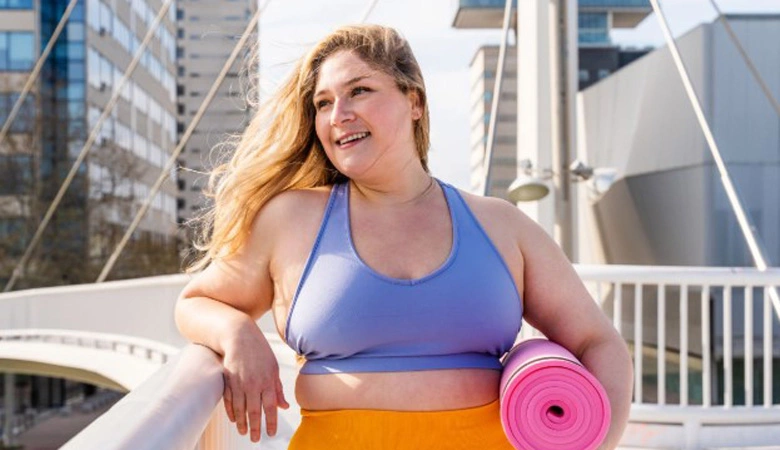
If ten minutes is what you have, ten minutes counts. Clear a safe patch of floor, warm up for two minutes, then move through eight simple standing exercises for 40 seconds each with 20 seconds to change. Work at a pace where your form stays controlled. If you are pregnant, within a year of giving birth, injured, unwell or managing symptoms, use the route for your stage before trying a general circuit.
This is not a “bounce back” plan and it is not only for women. Any busy parent or carer can use it. The title says mums because that is what readers search for; the actual goal is a routine that fits real life without a gym, a babysitter, burpees beside a crawling baby or a lecture about willpower.
The UK target for most adults is at least 150 minutes of moderate activity a week, or 75 minutes vigorous, plus strengthening the major muscle groups on two days. That is a weekly direction, not a pass-fail test for Tuesday. Short sessions can build towards it. A brisk walk on one of our easy toddler days out counts as movement too.
Choose your route before you start
| Your situation | Best starting route | What not to assume |
|---|---|---|
| Generally healthy and already active | The 10-minute circuit, adjusted to feel controlled | Short means it must be all-out |
| New to exercise or returning after a long gap | The five-minute version or one circuit with longer rests | Soreness proves a workout worked |
| Pregnant | Keep to activity that feels comfortable and follow pregnancy-specific NHS guidance | A general internet workout is automatically suitable |
| Birth was within the past year | Read the postnatal section and restart gradually for your recovery | The six-week check is a universal finish line |
| Leaking, pelvic heaviness, bulging, pelvic or back pain | Reduce impact and ask a GP or pelvic-health physiotherapist for individual advice | Common symptoms must simply be pushed through |
| Recent operation, injury, illness or concerning symptoms | Get appropriate healthcare advice before increasing exercise | A modified move removes every risk |
A safe two-minute setup
- Clear enough space to step forward, back and sideways without toys, rugs or low furniture.
- Use a stable chair against a wall, not a wheeled or folding chair.
- Put children outside the movement zone with appropriate supervision. A toddler appearing under a moving foot is not resistance training.
- Keep weights and resistance bands locked away when not in adult hands; bands can create a strangulation risk.
- Wear footwear that grips, or exercise barefoot on a secure non-slip surface if that is comfortable for the activity.
- Have water nearby and choose a cooler part of the room.
Start at a level that feels almost too easy. You can add difficulty next week; you cannot un-twist an ankle because the laundry basket was within lunging distance.
The 10-minute no-equipment starter workout
This circuit is for generally healthy adults who are not using it as pregnancy, postnatal rehabilitation or treatment for an injury. Work for 40 seconds, use 20 seconds to change position and rest whenever technique starts to unravel. Keep breathing; do not hold your breath to finish a repetition.
| Minute | Movement | Easier option | What to notice |
|---|---|---|---|
| 0–1 | Easy march and arm swing | March seated or hold the chair | Gradually warmer, not breathless |
| 1–2 | Side steps, shoulder rolls and gentle reaches | Make each step smaller | Clear floor and pain-free range |
| 2–3 | Chair sit-to-stand | Use hands lightly on thighs | Knees track with feet; sit under control |
| 3–4 | Wall press-up | Stand closer to the wall | Body stays in one long line |
| 4–5 | Side step with arm reach | Step without the arm movement | Soft knees and steady breathing |
| 5–6 | Supported split-stance dip | Small bend while holding the chair | Stable feet; no forward wobble |
| 6–7 | Hip hinge | Hands slide a short way down thighs | Hips travel back; spine stays comfortable |
| 7–8 | Standing knee lifts | Slow march holding the chair | Tall posture, no need to lift high |
| 8–9 | Heel raises | Both hands on the chair | Rise and lower slowly |
| 9–10 | Easy march, then slow breathing | Walk gently around the room | Heart rate begins to settle |
How to do the six main moves
Chair sit-to-stand
Sit near the front of a stable chair with feet comfortable and roughly hip-width. Lean forward from the hips, press through the feet and stand. Reach the hips back and lower with control. Use the chair; hovering above it to look impressive removes the useful safety check.
Wall press-up
Place hands on a wall around chest height and step back until the body forms a comfortable line. Bend the elbows and bring the chest towards the wall, then press away. Move the feet closer to make it easier. Stop if the wrist, shoulder or chest hurts.
Side step with reach
Step right, bring the left foot towards it, then reverse. Add an easy arm reach only if balance is steady. This can remain slow or become the more energetic section. A moderate pace usually lets you talk but not sing; gasping is not the objective.
Supported split-stance dip
Stand with one foot slightly behind the other and hold the chair. Bend both knees a small amount while staying tall, then push back up. This is not a deep lunge competition. Swap the front foot halfway through and keep the range pain-free.
Hip hinge
Stand tall with soft knees, put hands on thighs and send the hips backwards as if closing a drawer. Return to standing by pressing the floor away. The movement comes from the hips rather than rounding down to touch the floor.
Standing knee lift and heel raise
For knee lifts, shift weight onto one foot and lift the other knee only as far as balance allows. For heel raises, hold the chair and rise onto the balls of both feet before lowering slowly. These can be separate movements; combining them is not a compulsory coordination exam.
Five-minute and 20-minute versions
| Time available | Do this | Finish line |
|---|---|---|
| 5 minutes | One minute easy march; 45 seconds each of sit-to-stand, wall press-up, side step and heel raise with short changes | You moved. Do not add a guilt-based bonus round. |
| 10 minutes | Use the full starter circuit above | Record how it felt, not calories the device guessed |
| 20 minutes | Three-minute warm-up, the six main moves twice, then three minutes easy movement and stretching | Stop earlier if control or comfort changes |
| No uninterrupted time | Split two five-minute sessions across the day | Short chunks still contribute to weekly activity |
How to progress without turning Monday into punishment
Repeat the same version until it feels familiar. Then change one thing: add five seconds to each working period, take a slightly wider step, add a second circuit or use a light resistance you can control. Do not increase speed, range, load and duration in the same session.
Strength improves when muscles are challenged progressively, but household objects are not automatically safe weights. A leaking bottle, shifting backpack or child held during a squat can change balance suddenly. If you add load, use something secure and keep children clear. NHS instructor-led home videos are a better next step when you want a longer structured session.
What should the effort feel like?
During the more active minutes, moderate effort usually means breathing faster while still being able to talk. Vigorous effort makes a full conversation much harder. The talk test is more useful here than chasing a heart-rate number copied from somebody else, because medicines, pregnancy, health conditions, heat and your normal fitness can all change the response. Slow down if you cannot regain controlled breathing during the easier minute.
Strength work should feel like the muscles are working, but the movement should still look recognisable. Finish the set when you start holding your breath, rushing, wobbling or shortening the move just to keep the timer happy. Sharp, increasing or joint pain is not a target sensation. Ordinary effort and later mild muscle soreness are different from pain during the movement; if you are unsure which you are feeling, stop and get advice rather than using the next round as an experiment.
What could a realistic week look like?
You do not have to perform this circuit daily or complete all of the adult target indoors. One workable week might be the ten-minute circuit on Monday and Thursday, a brisk buggy walk on Tuesday, ordinary active travel or playground time on Saturday and easier movement on the remaining days. Another parent may split five-minute sessions around shifts. Add time gradually and leave recovery between strength sessions that work the same muscles.
Sleep, feeding, work and recovery can make identical workouts feel completely different. On a severely broken night, five gentle minutes or a walk may be the sensible version; skipping a session is also allowed. If newborn sleep has turned every plan into guesswork, our guide to what is normal in the first 12 weeks can help set expectations. Exercise should fit the family week rather than demanding that the family week bends around it.
Finding ten uninterrupted minutes may be the real barrier. NSPCC support for parents brings together broader help for parents, and GOV.UK childcare support is worth checking if eligible care could create a realistic slot for movement or rest.
Working out while children are at home
There are three workable models, and none requires turning the child into gym equipment:
- Parallel play: the child has a safe activity nearby but outside the movement area.
- Copying: an older child copies easy marching, reaching or dancing with their own clear space.
- Handover: another adult is explicitly supervising for ten minutes. Say the handover out loud.
Do not perform floor moves where a mobile baby can climb onto you without warning. Avoid lifting, swinging or balancing a baby as a weight. If a child needs you, pause. A workout that survives interruption is more useful than one that requires perfect silence.
Parents often have more success attaching movement to an existing cue—after nursery drop-off, before the shower or while dinner cooks safely—than waiting for motivation. Our guide to making family life easier at home uses the same “small repeatable system” idea.

If you are pregnant or recently gave birth
A general workout article cannot assess pregnancy, birth, surgery, pelvic floor, abdominal recovery, pain, bleeding, fatigue or your previous fitness. Use this section to choose the right source, not to self-clear for exercise.
During pregnancy
The NHS advises continuing normal activity for as long as it feels comfortable, adapting as pregnancy progresses and avoiding sudden strenuous exercise if you were not active before. You should be able to hold a conversation, warm up and cool down, drink water and tell an instructor you are pregnant. Avoid lying flat on your back for long periods particularly after 16 weeks, contact sports and activities with a high fall risk. Check with your maternity team if unsure.
After childbirth
After a straightforward birth, gentle walking, stretching and pelvic-floor exercise may begin when you feel able, but recovery is individual. A caesarean, assisted birth, significant tear, complications or ongoing symptoms changes the route. The UK Chief Medical Officers’ 2026 material says inactive and previously active women should both restart gradually, aiming over time towards 150 minutes of moderate activity and twice-weekly strength—not jump straight into HIIT.
Our postpartum recovery guide explains normal early recovery and urgent warning signs. Movement can support wellbeing, but it is not a cure or a test of character. If low mood, anxiety, frightening thoughts or disconnection are part of the picture, read the postnatal depression support guide and tell a health professional.
Symptoms to act on
Reduce impact and seek individual advice if exercise brings leaking urine or stool, pelvic heaviness or dragging, a visible abdominal bulge or doming, worsening pelvic or lower-back pain, or bleeding that becomes heavier. Pelvic-health physiotherapy can help; these symptoms are common enough to discuss and not something a mum has to accept as the price of exercise.
Pick a goal that is not punishment
Useful goals sound like “I want stairs to feel easier”, “I want two strength sessions a week”, “I want ten minutes that belongs to me” or “I want enough energy for the park”. Body weight can change for many reasons, and exercise does not guarantee a specific rate of fat loss. The original article’s “pesky pounds” language is gone.
Track attendance, a movement variation, the talk test or how daily tasks feel. If a wearable’s calorie number makes the session feel like debt repayment, ignore it. Consistency grows from a routine that can survive poor sleep, work, childcare and the occasional week when nothing goes to plan.
Before paying for coaching because family life feels impossible, look at the wider support too. NSPCC support for parents and GOV.UK childcare support may address the pressure more directly than another fitness plan.
When personal help is worth paying for
A qualified professional can adapt exercise around injury, disability, pregnancy or postnatal recovery and check technique. Ask what qualification they hold, whether it covers your situation, how they assess symptoms, what insurance they carry and how they keep an in-home session safe around children. For pelvic symptoms, look for a pelvic-health physiotherapist rather than a generic transformation plan.
An earlier contributed version of this page linked to a Chicago-based fitness trainer. That exact placement is retained so the contributor’s link is not silently removed. KidsCo has not tested or endorsed that provider, and UK readers should verify local credentials and suitability independently.
When to stop
Stop the session if you feel pain, become unwell or develop worrying symptoms. Seek urgent medical help for chest pain or pressure, severe or unexplained shortness of breath, fainting or other symptoms that feel serious. For non-emergency symptoms that persist, contact an appropriate healthcare professional rather than repeatedly testing them with another workout.
Common questions
Is a 10-minute home workout actually worth doing?
Yes. It adds activity, builds a repeatable habit and can be one part of the weekly total. It does not need to reproduce a full gym session to have value.
Should busy mums do HIIT because it is faster?
Not automatically. HIIT is vigorous and may be unsuitable for a beginner, pregnancy, recent birth, pelvic-floor symptoms, injury or someone who simply hates it. Moderate movement and gradual strength work are valid. Faster is not universally better.
Can I hold my baby while I squat?
This guide does not recommend using a baby as weight. Grip, balance and the child’s movement are unpredictable. Put the baby somewhere safe and supervised or choose a move that can stop instantly.
What if I cannot do a press-up or lunge?
Use the wall press-up and a shallow supported split-stance bend, or substitute another pain-free standing movement. There is no compulsory exercise. If a movement causes pain or you need individual adaptation, ask a qualified professional.
How often should I repeat the circuit?
Start with a frequency you can recover from, such as two or three short sessions a week, alongside walking or other activity. Build gradually towards the UK adult guidelines rather than trying to complete the whole weekly target with this one circuit.
Do I need weights, bands or a fitness watch?
No. The starter plan needs a clear floor, a wall and a stable chair. Equipment can add variety later, but it does not make a short session more legitimate. A phone timer is optional too: counting a comfortable number of controlled repetitions works when alerts, naps or screen time make a strict interval impractical.
Can exercise help postnatal depression?
Activity may support mood and wellbeing, but it is not a replacement for assessment and treatment. If you may have postnatal depression or anxiety, speak to a GP, midwife or health visitor and use urgent support if you or the baby may be at risk.
The bottom line
Clear the floor, choose the route that fits your body today and do five or ten controlled minutes. Stop before form becomes chaos, progress one thing at a time and let a short session be complete. Parenthood already contains enough unfinished jobs; movement does not need to become another one.
UK guidance reviewed
Full research review: KidsCo Editorial Team, 6 August 2026. This is general information, not a personal exercise prescription or a clinical review.
- NHS: physical activity guidelines for adults aged 19 to 64
- NHS Better Health: free home workout videos
- NHS: keeping fit and healthy with a baby
- GOV.UK: 2026 physical activity guidance after childbirth
- NHS: exercise in pregnancy
- NHS pelvic health service: return to activity after birth
- NHS: instructor-led Fitness Studio videos and suitability notes


